Thursday, April 28, 2016

A Tropical Paradise on San Francisco's Rincon Hill: A Visit with Robert Louis Stevenson and Charles Warren Stoddard

As the Hispaniola sails across the stage at Berkeley Rep in Mary Zimmerman's Treasure Island, some theatergoers will know that author Robert Louis Stevenson lived in San Francisco and Oakland from 1879 to 1880.

What they may not know is that Stevenson credited his love of the South Seas to his visits and conversations with poet and travel writer Charles Warren Stoddard in Stoddard's curiosity-filled house on San Francisco's Rincon Hill.

When the two writers met, Stoddard had recently returned from a five-year ramble in Europe, was writing a weekly column for the San Francisco Chronicle, and lived in a faded Gothic mansion on Rincon Hill, a formerly-wealthy neighborhood south of Market.

Rincon Hill's glory days had begun to slide when the city flattened the sand dune at Second and Harrison and the houses began their slow slip into the resulting slot. The wealthy homeowners moved to other quarters, and those looking for cheap rent moved in. Stoddard described his ten-dollar-a-month mansion in his book, The Footprints of the Padres: "Every winter the rains beat upon it and drove through and through it, and undermined it, and made a mush of the rock and soil about it. Portions of real estate deposited themselves, pudding fashion, in the yawning abyss below."

Enter Stevenson

Stevenson arrived in California in the summer of 1879. His sweetheart Fanny Osborne lived in Oakland, and had only recently divorced her husband. In December, Stevenson moved into a room on Bush Street.

He set out to sketch the city each morning, and one day discovered Rincon Hill, which he described as "the most San Francisco-ey part of San Francisco." On the first day he sketched, he saw "a youngish, good-looking fellow" watching him from a ground floor window. On the second day, the fellow nodded and Stevenson nodded back. On the third day, Stoddard invited Stevenson inside "with the impromptu cordiality of artists."

"There came to me a lean, lithe stranger," said Stoddard. "I knew him for a poet by his unshorn locks and his luminous eyes, the pallor of his face and his exquisitely sensitive hands."

Stevenson found Stoddard "lively and engaging," and was most impressed with the décor in Stoddard's parlor. "I sat presently in the midst of a museum of strange objects,—paddles and battle-clubs and baskets, rough-hewn stone images, ornaments of threaded shell, cocoanut bowls, snowy cocoanut plumes—evidences and examples of another earth, another climate, another race, and another (if ruder) culture."

Stevenson looked out the bay view window as Stoddard told stories of the tropics and showed his artifacts of adventure. Stoddard had traveled to Hawaii and Tahiti and written about his escapades for the Overland Monthly. He collected his tropical essays in South-Sea Idylls, a book that, according to Stoddard's biographer Roger Austen, characterized his coming out.

Stevenson married Fanny Osborne that spring, and the newlyweds took a three-week honeymoon in the Napa Valley. He was in California for less than a year, but it was a year that changed his life in significant ways, including the fact that he "first fell under the spell" of the islands in Stoddard's parlor on one of San Francisco's original Seven Hills.


Sources: Genteel Pagan: The Double Life of Charles Warren Stoddard, Roger Austen; Ina Coolbrith: The Bittersweet Song of California's First Poet Laureate, Aleta George; and More San Francisco Memoirs, 1852-1899, The Ripening Years, Malcolm E. Barker, ed.

Monday, April 11, 2016

Women in literature: "Ina Coolbrith" wins bronze IPPY award in biography


In the letter I received to announce that my book, Ina Coolbrith: The Bittersweet Song of California's First Poet Laureate, won a bronze medal from the Independent Publisher Book Awards (IPPY) in the biography category, the Jenkins Group noted how this year's medalists "reveal the importance of women in our industry, with a strong showing of female authors and publishers throughout the contest."

I would add that with so many female authors there is a greater tendency to highlight women as subjects, and that is equally as important. The tagline for the National Women's History Project is "writing women back into history," a directive that matches the spirit of my reason for writing a biography about Ina Coolbrith. Coolbrith lived an epic life and was California's most beloved poet for fifty years, and yet who today remembers her name or her story? More importantly, what young girl who is interested in literature knows that California's first poet laureate was a woman who first published at age fifteen?
Coolbrith in Mario Chiodo's sculpture, Champions for Humanity

A woman's point of view is important. Her experience is unique, and her stories are ones that I want to hear. When Ina Coolbrith accepted the laurel crown as California's first poet laureate in 1915 she accepted it on behalf of her "sister women." I'm thrilled to be a medalist along with my sister women for the 20th Annual IPPY Awards, in what the Jenkins Group is calling "The Year of the Woman."


Wednesday, January 6, 2016

Ina Coolbrith on C-Span's Book TV Cities Tour

I was honored to talk about Ina Coolbrith for C-SPAN's Book TV Cities Tour of Oakland. C-SPAN's Cities Tours program focuses on the literary life and history of select cities.

I'm in the good company of Elaine Brown, who speaks about the Black Panther Party; Blanche Richardson, who highlights Marcus Books; Drew Johnson on the Dorothea Lange collection at the Oakland Museum of California; and many more!

FIND LINK TO INTERVIEW HERE

Tuesday, October 6, 2015

7 reasons to remember Ina Coolbrith during her centennial

1. She was a woman of firsts. Ina Coolbrith was California's first poet laureate; the nation's first
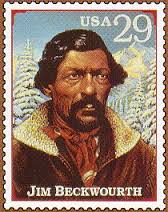
state laureate;  the first woman in America to write a commencement ode for a university (University of California, 1871); Oakland's first public librarian; and one of the first white children to come into California over Beckwourth Pass.

2. She walked to California from Illinois. At age 11 she came to California by covered wagon on the Overland Trail, a fact that inspired one reviewer to dub her a "bad ass."

3. She escaped polygamy. Although she was a niece of Mormon founder Joseph Smith, she wanted nothing to do with polygamy. At age 16, she told her teenage cousin Joseph F. Smith (later the sixth president of the Church of Jesus Christ of Latter-day Saints):
Is it right for a girl of 15 or even 16 to marry a man of 50 or 60… I think I see myself, vowing to love and honor, some old driveling idiot of 60, to be taken into his harem and enjoy the pleasure of being his favorite Sultana for an hour, and then thrown aside, whil’st my Godly husband, is out Sparking another girl, in hopes of getting another victim to his despotic power. Pleasant prospect, I must say. This, Joe, this is of God, is it? No, never, never, never!
4. She chose not to marry again after her husband tried to kill her. At 20, her jealous husband came after her with a six-shooter. She divorced him, changed her name, and moved to San Francisco. When her friend John Muir tried to play matchmaker, Ina sent Muir a poem to
Courtesy of University of the Pacific Library
stop his attempts:

"The earth may quake, the heaven fall, 
The ocean fail, or (thought appalling) 
I may never wed at all! 
But this is certain—write it down— 
Or if you smile, or if you frown,
I do not want your Mr. Brown."

5. She flirted with the idea of same-sex marriage. Ina was a little bit in love with writer Charles Warren Stoddard when they were in their twenties. Eventually, she came to accept his preference for men. Once she did, she turned the tables and told him that a woman had taken a liking to her. "She is as fond of me, I verily believe, as you are of Fred." She then proposed a double wedding with she and Mrs. Flint, and Stoddard and his young pal Fred.

6. She mentored the young Jack London and Isadora Duncan as Oakland's public librarian.

London later told her, "No woman has so affected me to the extent you did. I was only a little lad. I knew absolutely nothing about you. Yet in all the years that have passed I have met no woman so
Courtesy of Oakland Public Library
noble as you." Isadora Duncan wrote in her memoir, "The librarian was a very wonderful and beautiful woman, a poetess of California, Ina Coolbrith. She encouraged my reading and I thought she always looked pleased when I asked for fine books."

7. Ina didn't let age deter her from pursuing her passions. At 78, she moved to New York to write poetry and to be near her protégée Carl Seyfforth, a young and handsome concert pianist. She wrote enough poetry to fill a final collection.


Wednesday, July 22, 2015

Calla Shasta Miller's unmarked grave

Calla Shasta Miller, 1879. Claremont University Consortium.

This Saturday I am going to Joaquin Miller Park for the California Writers Club annual picnic. While visiting Miller's former homestead in the hills above Oakland, I will remember his daughter, Calla Shasta Miller, who is buried somewhere on the grounds in an unmarked grave.

Calla Shasta lived with Ina Coolbrith for a decade while Joaquin was pursuing his career in England and New York. In 1879, seven years after she came to live with Ina, Calla Shasta wrote her uncle, George Miller:

"I am always ready to answer you in anything. For I have my own judgment about me in everything. I am not afraid of anybody or anything ... I am sadly disappointed for not being a boy. I am not half as bright as I should like to be but I always feel intelligent and never feel too old to learn. If I had the money I would be an artist or a musician, that are my favorites. But it is only 8 years ago since I realized what kind of an animal I am. I did not even know how to speak English and did not know B from a bull’s foot. Such was I when I first came down from Shasta where I was full of spunk killing skunks." (1)

The young woman eventually married, but she returned to Ina's Oakland home in 1892, her marriage over. Ina told Charles Warren Stoddard that Calla Shasta came to her "homeless, helpless, and a victim to drink."(2) Ina secured a doctor to try hypnotism and the Gold Cure, a popular abstinence program that purportedly contained gold, but in reality was a mixture of alcohol, ammonium, strychnine, and boric acid.

Calla Shasta did not stay at Ina's house for long. She died in 1903 and Miller buried her in an unmarked grave on his property. Joaquin Miller died ten years later, and although Ina was too sick to attend Miller's funeral at "The Hights," she sent "Vale, Joaquin" to be read. She also asked a friend to look for Calla Shasta's grave and vowed to mark "poor Indian Callie's grave" if she ever could afford to. (3) Ina was not a woman of means, and she never did mark the grave. Ina's own grave at the Mountain View Cemetery remained unmarked from the time of her death in 1928 until 1986 when the Ina Coolbrith Circle gave her a beautiful marble headstone.


(1) Calla Shasta Miller to George Miller (Joaquin Miller's brother), November 3, 1879. Joaquin Miller Collection, Honnold/Mudd Library, Claremont College. (2) Coolbrith to Charles Warren Stoddard, August 15, 1892, The Huntington Library, San Marino, CA. (3) Coolbrith to Herbert Bashford, February 25, 1913, The Bancroft Library, University of California, Berkeley.

Tuesday, June 23, 2015

Petticoat Rule: A guest blog post for the San Francisco History Center of the San Francisco Public Library

In 1898 poet Ina Coolbrith applied for a job as librarian at San Francisco's Mercantile Library (which later merged with the Mechanics' Institute). Several board members grumbled about "petticoat rule," and one said it was nothing against Miss Coolbrith but a "mere question of sex and the weaker is in disfavor."

This injustice came despite the fact that for nearly 20 years Coolbrith had managed budgets, staff, acquisitions, and catalogues at the Oakland Public Library.

The San Francisco Examiner came to her defense when it suggested on January 17, 1898, that the library burn all books written by women if they were to deny Coolbrith the position. "No intellectual petticoatism! Down with the Mrs. Brownings, the Jane Austens, the George Eliots and the Charlotte Brontes!"

Coolbrith got the job and 116 years later was inducted into the California Library Hall of Fame.

Join me to at the San Francisco Public Library on Thursday, June 25, for a talk on Ina Coolbrith, poet, librarian, and the most beloved literary ambassador in the early American West. She was crowned poet laureate on June 30, 1915 during the Panama-Pacific International Exposition 1915 - 2015.

For more on petticoat rule check out my blog on the San Francisco History Center's "What's on the 6th Floor."